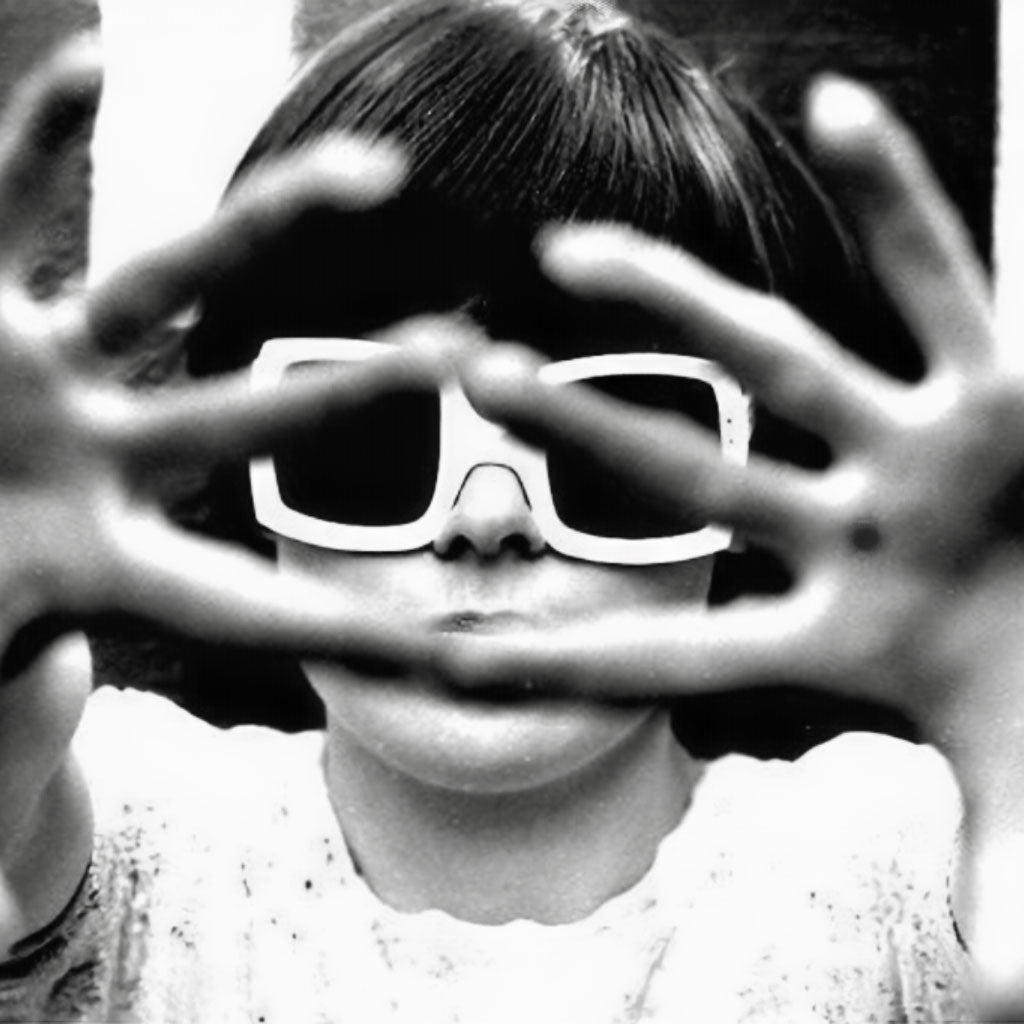
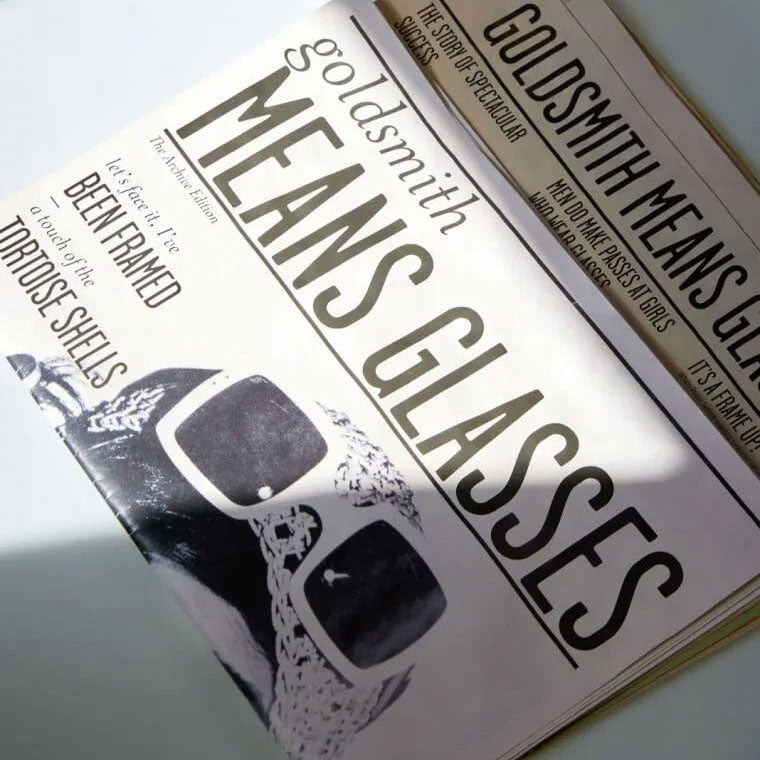
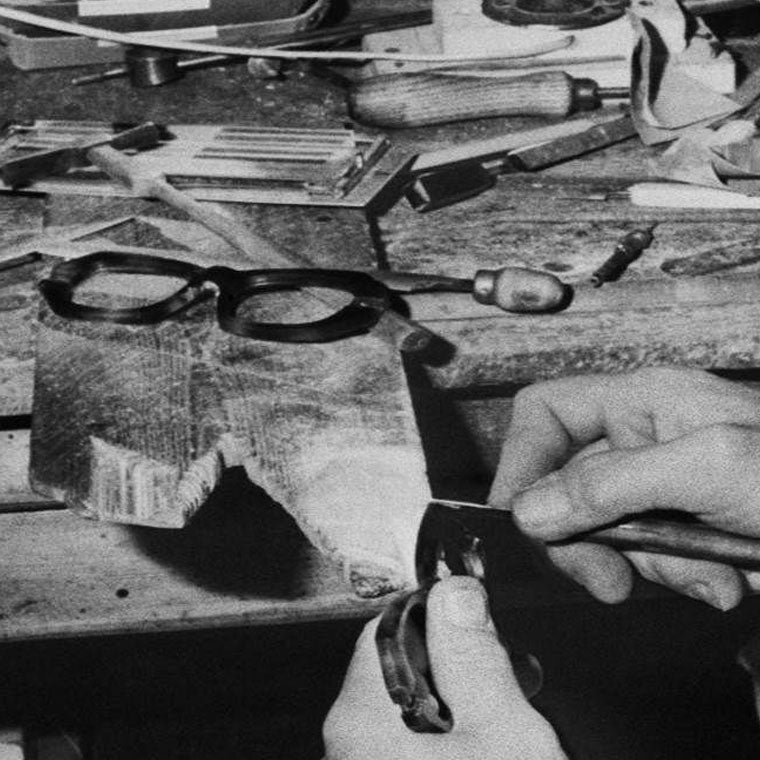


Before eyewear was fashion, it was Oliver Goldsmith. How a small London atelier became the go-to choice for generations of musical legends - and why the world's biggest stars still choose OG today.
When we talk about the visual identity of the world's greatest musicians, we tend to think of guitars, stage outfits, haircuts, and album covers. But one accessory has quietly shaped musical culture and helped define some of the most recognisable faces in modern history: eyewear. And at the centre of that story, long before eyewear became a statement of style, status, or artistic intention, stands Oliver Goldsmith.
Since the 1960s, Oliver Goldsmith has held a unique place in the world of music. What began as a London-based family eyewear business evolved into the go-to brand for rock 'n' roll royalty, soul icons, pop innovators, and style-defining creatives of every era. If you were anyone in the music industry, you wore OG. Not because of sponsorship deals or marketing pushes, those came decades later, but because wearing Oliver Goldsmith whispered something far more powerful: you belonged to an inner circle.
This is the story of that enduring relationship, how a small London atelier became a global symbol of style, artistic identity, and cultural influence, from John Lennon and The Rolling Stones to Lady Gaga and Robbie Williams.
A New Era in Fashion:
The 1960s and the Rise of Eyewear as Identity.
To understand why Oliver Goldsmith became so influential among musicians, it helps to understand the moment in which it happened. The 1960s were an unprecedented explosion of creativity. The fashion, music, and art scenes collided in ways the world had never seen. London, specifically Soho, became the epicentre of youth culture, and it was here, on Poland Street, that Oliver Goldsmith operated its now-legendary showroom.
At the time, eyewear was not seen as a fashion accessory. Glasses were functional, corrective, and often hidden rather than celebrated. The idea of wearing bold, sculptural, attention-grabbing frames was almost revolutionary.
But musicians, driven by the need to self-create, to stand out, to cultivate an image that was instantly recognisable, saw something different in Oliver Goldsmith's designs. These frames weren't just eyewear; they were artistic tools. They helped people build a persona, shape a silhouette, and communicate an attitude long before a note was played. In an era when personal image became part of the product, eyewear suddenly mattered.
In the Heart of Soho:
Poland Street was the Birth of an Iconic Club.
Walking into Oliver Goldsmith's factory showroom on Poland Street in the 1960s was like stepping behind the velvet rope of British creative society. The showroom became known as a low-key yet unmistakably glamorous hub, a place where the leading artists, actors, models, and musicians of the time could browse innovative eyewear that simply didn't exist anywhere else.
There were no Instagram campaigns, celebrity gifting programs, or high-budget advertising. Instead, Oliver Goldsmith eyewear spread through word of mouth among London's elite. Wearing OG signalled that you were plugged into the creative pulse of the city. It was a quiet but powerful badge of insider status. Among these insiders were some of the most influential musicians of all time.

John Lennon:
The Man Who Turned Minimalism into Iconography
understood the power of visual identity. His frames became one of the most recognisable eyewear silhouettes in modern history (his round sunglasses) instantly associated with peace, art, activism, and countercultural elegance. Oliver Goldsmith was central to that image.
Through Lennon, Oliver Goldsmith frames moved from private fashion circles into public consciousness. Millions saw them, admired them, and associated them with creative brilliance.
The Rolling Stones:
Attitude, Excess, and Rock 'n' Roll Swagger.
If Lennon represented cerebral minimalism, The Rolling Stones embodied the opposite: raw power, rebellious confidence, and sensual intensity. Their off-duty uniform often leaned into oversized silhouettes. Oliver Goldsmith frames played a key role in shaping that visual identity too.
Wearing OG became part of the Stones' off-duty uniform, proof that even when they weren't on stage, they exuded a kind of effortless cool that the rest of the world could only try to replicate. The frames gave them stylistic edge, whether oversized, angular, or provocatively unusual.
For a generation trying to push boundaries, musically, visually, socially, OG became shorthand for sophistication without conformity. It's no coincidence that some of the most iconic photographs of the era show musicians in eyewear that looks surprisingly modern even today.
Great style doesn't age; it evolves. Oliver Goldsmith's designs have always done exactly that.
Lulu, Nancy Sinatra, and the Women Who Defined Musical Feminine Power.
It wasn't just male musicians shaping their identities through eyewear. Female artists of the 1960s were reclaiming fashion, autonomy, and public visibility in powerful ways, and Oliver Goldsmith frames became tools of expression for them as well.
Lulu was youthful, bold, fresh-faced, and confident, and she used eyewear to push against the expected norms of young female pop performers. Her OG frames often played with scale and shape, emphasising her vivacity and making her instantly recognisable. Nancy Sinatra had her signature 'mod” styling, go-go boots, and smoky glamour,. She was the embodiment of 60s chic. OG frames added an extra layer of sophistication and cinematic drama to her look, frames that balanced femininity with sharp, unmistakable modernity.
Together, these artists demonstrated something revolutionary: eyewear wasn't just for correcting eyesight. It was for crafting identity. It was part of the aesthetic vocabulary of a performer. And Oliver Goldsmith was the brand writing the language.
The OG Effect:
Why People Gravitate Toward Oliver Goldsmith
There are many reasons why musicians and celebrities alike connected with OG so deeply, and continue to do so today.
- Eyewear as Self-Expression - OG understood early on that glasses could frame a face. Their designs were architectural, bold, sculptural, and they helped reinforce a persona.
- Exclusive, Insider Appeal - Even at the height of its popularity, OG frames weren't mass-market items. They were for people in the know. Musicians gravitated toward them because they represented authenticity rather than commercialism.
- London's Cultural Melting Pot - Being located in Soho meant OG was part of the creative bloodstream of London. Musicians could drop in privately, try designs, chat, and experiment. It felt personal, almost bespoke.
- Timeless Design - Unlike most trends of the era, Oliver Goldsmith frames have remained relevant for 70+ years. People want continuity; they want to be part of a lineage of style. Wearing OG connects them to that heritage.
The Legacy Lives On:
From 1960s Icons to Today's Superstars.
The relationship between OG and the music has influenced new generations of eyewear designers and musicians alike who have discovered what the brand represented.
Lady Gaga:
The Modern Patron Saint of Avant-Garde Style.
Few contemporary artists understand the power of fashion as deeply as Lady Gaga. Her relationship with OG continues the tradition of using bold eyewear to amplify artistic identity.
Whether performing, attending fashion events, or appearing in editorial shoots, she consistently gravitates toward frames that echo the spirit of OG's mid-century designs, fearless, sculptural, unforgettable.
Robbie Williams:
A British Icon Continuing a British Tradition.
Echoing the rock lineage of the 60s, Robbie Williams is another modern figure who favours OG eyewear. His style, classic yet rebellious, aligns perfectly with the brand's heritage. When he wears OG, he is participating in a tradition that links him with the artists who shaped the musical landscape decades before him.
The club is still exclusive, still discerning, still stylish. And still rooted in the values that made OG legendary in the first place.
Why This Relationship Endures:
Style Never Goes Out of Fashion.
The reason Oliver Goldsmith continues to captivate musicians across eras is simple: good design is timeless. Trends fade. Fads burn out. But artistry, true, thoughtful, masterfully crafted artistry, endures. Oliver Goldsmith's frames don't belong to any specific decade. They don't age. They don't feel retro. Instead, they feel consistent with the ongoing evolution of creativity and self-presentation.
For people whose care about uniqueness, recognisability, and the power of visual storytelling, OG offers:
- Sculpture when minimalism is needed
- Presence when intensity is required
- Elegance when refinement is desired
- Personality when the performer wants to push boundaries
In other words: OG frames adapt to the artist, not the other way around.
From Stage to Street:
The Cultural Impact of OG Eyewear.
Music and fashion have always danced together, each influencing the other. But with OG, this relationship has been particularly symbiotic. Some of the most iconic portraits of the 20th century feature musicians and actors in eyewear, often OG. These images circulated globally, cementing particular silhouettes into popular culture. The glasses became shorthand for their celebrity persona.
Fans often emulated the eyewear choices of their favourite artists. OG, intentionally or not, helped shape global trends.
The OG Club: More Than Eyewear, A Lifestyle
Throughout the decades, wearing Oliver Goldsmith has represented more than simply making a fashion choice. It has often reflected a way of living, creative, confident, curious, slightly rebellious, and unafraid to stand out.
In the 1960s, the question 'Do you know where to get OG?” was as telling as the frames themselves. It implied connection, taste, and a certain insider sensibility. Today, the spirit of that club still exists. Oliver Goldsmith represents:
- Artistic credibility
- A connection to cultural history
- A sense of exclusivity without pretentiousness
- A lineage of musical, cinematic, and creative influence
And like all truly iconic brands, OG continues to thrive not because it follows trends, but because it sets a timeless standard.
Conclusion:
100 Years of Influence and Still Going Strong
From John Lennon and The Rolling Stones to Lady Gaga and Robbie Williams, Oliver Goldsmith's relationship with musicians is one of those rare stories in fashion history where authenticity, artistry, and cultural relevance converge seamlessly.
What began in a factory on Poland Street, London became a global phenomenon, not through marketing but through meaning. Artists chose OG and OG shaped their faces, identities, legacies.
Today, as modern artists seek to differentiate themselves in an oversaturated visual world, Oliver Goldsmith remains a beacon of originality, craftsmanship, and style. The club is still exclusive, still stylish, still rooted in creativity.
Because great style, true style, never goes out of fashion.
FAQs
Why did musicians start wearing Oliver Goldsmith eyewear in the 1960s?
In 1960s London, eyewear began shifting from purely functional to a form of self-expression. Oliver Goldsmith offered bold, design-led frames that helped artists shape a recognisable identity on and off stage.
Where was Oliver Goldsmith based during the Soho era?
Oliver Goldsmith operated a renowned showroom in Soho on Poland Street, a creative hub where musicians, artists and tastemakers discovered standout designs before eyewear became mainstream fashion.
Did John Lennon wear Oliver Goldsmith sunglasses?
Oliver Goldsmith frames became closely associated with John Lennon’s signature look. The brand’s minimalist, round silhouettes helped define an instantly recognisable visual identity tied to music and culture.
What makes Oliver Goldsmith eyewear different from trend-led brands?
Oliver Goldsmith is known for distinctive silhouettes, strong design heritage and frames that feel timeless rather than seasonal. The appeal is rooted in style, craft and cultural legacy rather than short-lived trends.
Is Oliver Goldsmith still worn by contemporary artists?
Yes. Modern artists and style icons continue to choose Oliver Goldsmith because the designs are bold, expressive and connected to a long lineage of cultural influence.
How do I choose an Oliver Goldsmith style that suits me?
Start with the silhouette you’re drawn to (round, oversized, angular or statement). Consider the look you want to project and use product details such as frame width and lens size to find a fit that feels balanced on your face.